PSLF Student Loan Changes: Rule Fight Ends, Collections Next
The government has dropped its fight to revive a rule limiting Public Service Loan Forgiveness, while reports say collections on defaulted student loans could restart. Here is what changed and what borrowers can do.
- The government dropped its appeals in October, so the vacated PSLF employer rule stays dead and PSLF works as before.
- Wage garnishment and tax refund seizures on defaulted federal loans have been paused since January 16, 2026, but reports say Treasury may restart them in 2027.
- Borrowers can certify PSLF employment and get out of default through official StudentAid.gov tools.
As of October 26, 2026, the Trump administration has stopped defending a rule that would have let the Education Department cut off Public Service Loan Forgiveness (PSLF) for people who work at employers it accused of illegal activity. The rule never took effect and remains struck down, so PSLF works the same way it did before. Separately, wage garnishment and tax refund seizures on defaulted federal student loans are still paused, but news reports say the Treasury Department is preparing to restart collections.
Below is what changed, who is affected and what borrowers can do. This is general information, not financial or legal advice. For details on your own loans, use StudentAid.gov, the Education Department's official site.
What the PSLF rule would have done
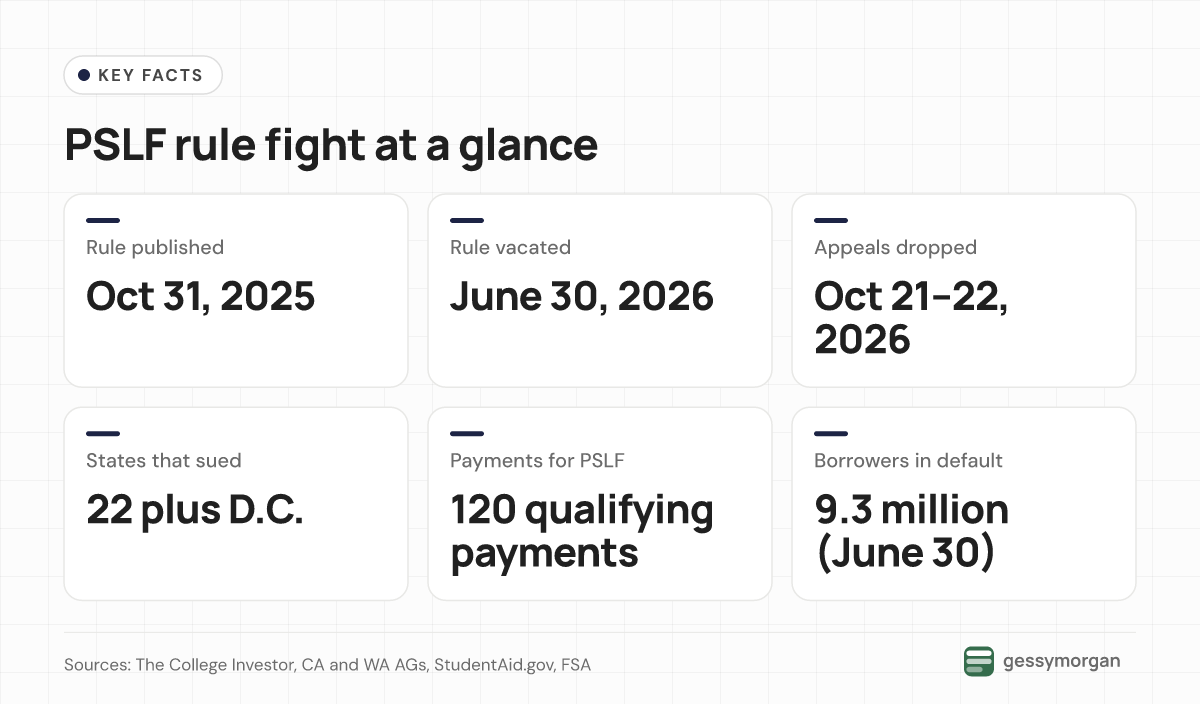
PSLF forgives the remaining balance on federal Direct Loans after a borrower makes 120 qualifying monthly payments while working full time for a government agency or an eligible nonprofit, according to StudentAid.gov.
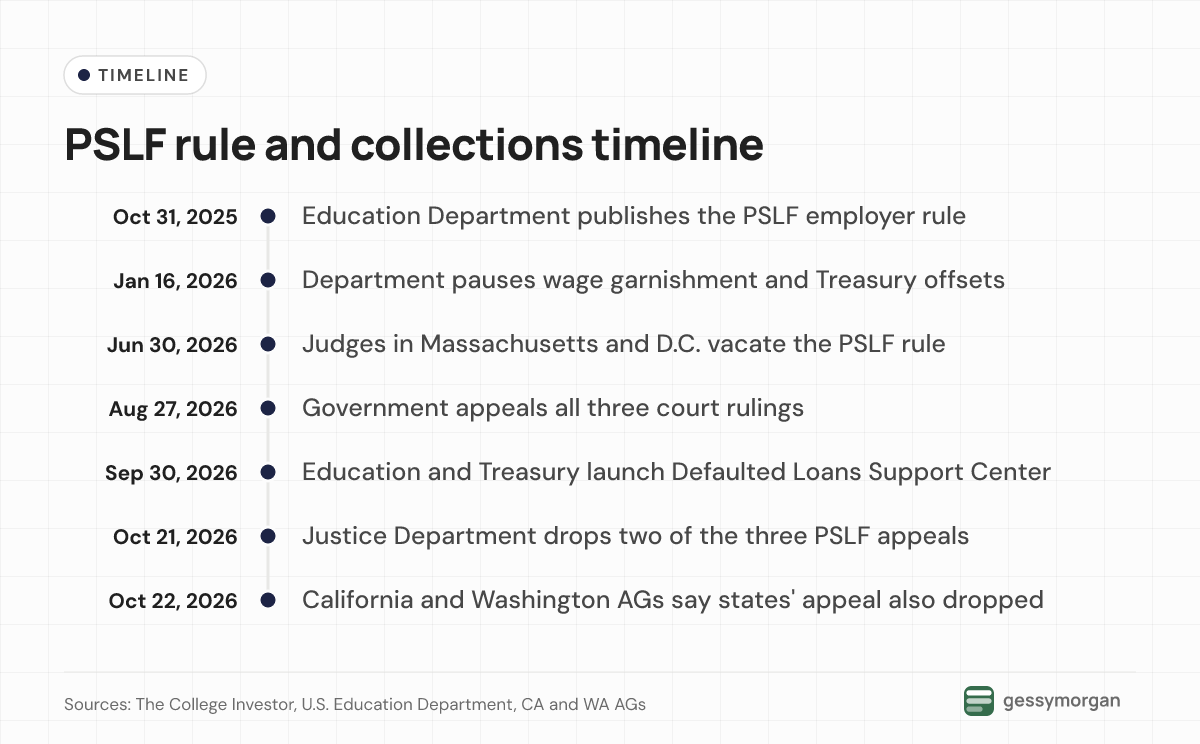
The disputed rule, published October 31, 2025, followed Executive Order 14235, which President Trump signed on March 7, 2025, The Epoch Times reported. It would have allowed the department to disqualify employers found to have a "substantial illegal purpose." Activities named in the order included aiding violations of federal immigration law, supporting terrorism, illegal discrimination and certain kinds of medical care for transgender minors. People working for a disqualified employer would have stopped earning qualifying payments, The College Investor explained.
The two sides describe the rule very differently. The administration argued it would stop taxpayer-funded forgiveness from benefiting groups engaged in illegal activity, IBTimes Australia reported. California Attorney General Rob Bonta's office said it used a vague standard to target lawful work that the administration disfavored, such as legal help for immigrants and civil protest.
How the court fight ended
Three lawsuits challenged the rule. A coalition of 22 attorneys general sued in Massachusetts. Nonprofits, unions and cities, led by the National Council of Nonprofits, filed a second case in the same court. A third case, led by the Robert F. Kennedy Center for Justice and Human Rights, was filed in Washington, D.C.
On June 30, 2026, one day before the rule was due to start, federal judges struck it down. Judge Myong J. Joun in Massachusetts found it contrary to law, arbitrary and capricious, and a violation of the First Amendment. Judge Amir Ali in Washington ruled against the department in the D.C. case. The government appealed all three rulings on August 27, The College Investor reported.
On Wednesday, October 21, Justice Department lawyers filed joint stipulations dropping the appeals in the D.C. case and the nonprofits' case. Each side agreed to pay its own costs, and the filings gave no reason. That day, The College Investor reported the states' appeal was still pending. On October 22, the attorneys general of California and Washington announced that the department had dropped its appeal in their case too, leaving the Massachusetts ruling in place.
Diane Yentel, president of the National Council of Nonprofits, said: "With the appeal dismissed, the court's order vacating the rule stands, and PSLF remains as Congress designed it." Bonta said: "The Trump Administration tried and failed to turn a bipartisan promise into a political weapon." The Justice Department did not respond to The Epoch Times, and the Education Department has not publicly explained the decision.
What it means for PSLF borrowers
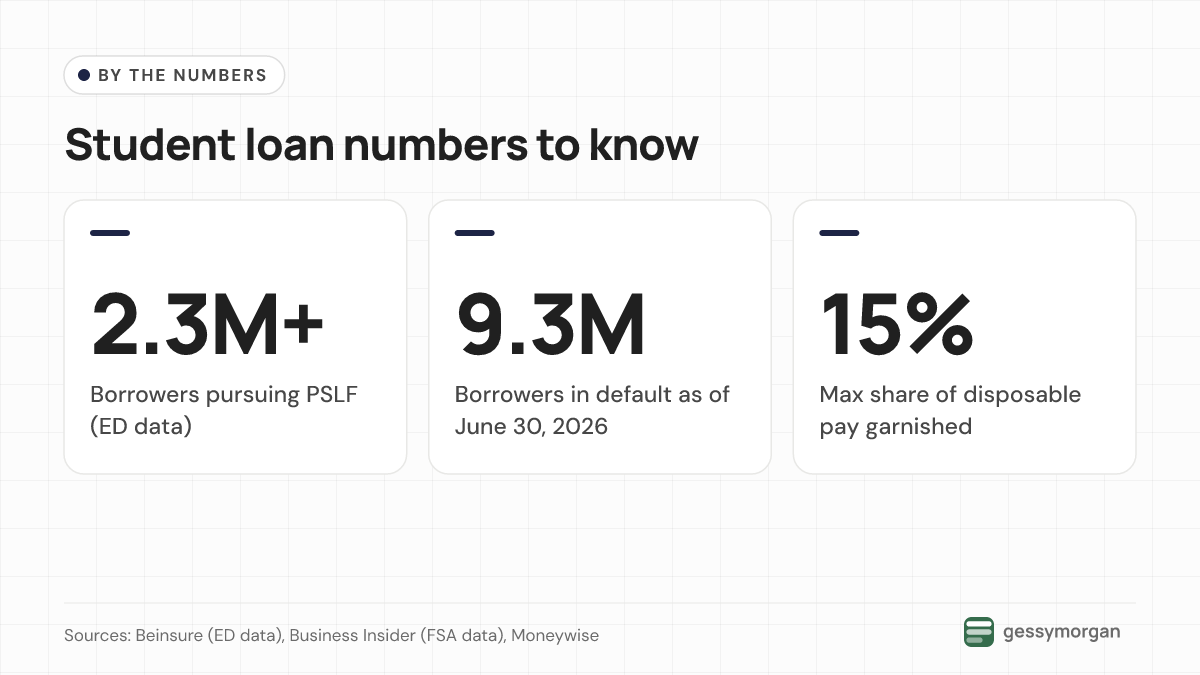
For borrowers, nothing changes day to day. More than 2.3 million borrowers are pursuing PSLF, according to Education Department data cited by Beinsure and Forbes. The existing employer rules still apply: government organizations at any level, 501(c)(3) nonprofits and some other nonprofits that provide qualifying public services remain eligible, per StudentAid.gov.
Steps that still matter:
- Certify your employment. StudentAid.gov advises submitting the PSLF form every year and whenever you change employers. The PSLF Help Tool and Employer Search can check whether an employer qualifies.
- Stay on a qualifying plan. Qualifying plans include the new Repayment Assistance Plan, Income-Based Repayment, Pay As You Earn, Income-Contingent Repayment and the 10-year Standard plan. Payments under the Tiered Standard Plan do not count.
- Watch for loan-type limits. Parent PLUS loans, and consolidation loans that include them, cannot use the Repayment Assistance Plan, so they cannot keep qualifying for PSLF, StudentAid.gov says.
The department could still try a different approach through new rulemaking, The Money Overview noted, so the issue may return in another form.
The student debt collection changes
Collections are paused for now
On January 16, 2026, the Education Department delayed involuntary collections, including administrative wage garnishment and the Treasury Offset Program, which can seize tax refunds. It said the pause would allow time to roll out repayment changes under the Working Families Tax Cuts Act, including a new income-driven plan that opened July 1, 2026, and a second chance to rehabilitate a defaulted loan. As of late September, the administration had not said when the pause would end, Business Insider reported.
Treasury is taking over defaulted loans
In March, the department announced a partnership under which Treasury took on operational responsibility for collecting defaulted federal student loans, First For Money reported. On September 30, the two agencies launched the Defaulted Loans Support Center, an online portal for applying to rehabilitate or consolidate loans, making payments and reviewing discharge options. Education Secretary Linda McMahon said the department "was never intended to serve as the fifth largest bank in America."
Reported, but not confirmed
On October 19, The Washington Sun, citing unnamed sources, reported that Treasury could begin hiring private debt collectors as soon as November, with garnishment and benefit offsets possibly following in 2027. Coverage from IBTimes UK and Common Dreams said some officials want collections to resume before the April 15, 2027 tax deadline, while others want to wait until the new portal runs smoothly. No official restart date had been announced, Moneywise reported.
Borrower advocates object. Michael Pierce of Protect Borrowers criticized "restarting debt collection the moment any political accountability has passed," reacting to reports that collections would wait until after the November midterms. His group has also questioned whether the government has the data needed to certify debts for collection.
The scale is large. Federal Student Aid counted 9.3 million borrowers in default as of June 30, up 400,000 from the previous quarter, Business Insider reported. The Center for American Progress puts the figure at 9.5 million. When collections do resume, wage garnishment can take up to 15% of disposable pay without a court order, Moneywise noted.
What borrowers in default can do now
StudentAid.gov's Defaulted Loans Support Center lists the main options:
- Rehabilitation: make nine consecutive monthly payments, then enroll in a repayment plan.
- Consolidation: make three monthly payments first, or consolidate and choose an income-driven repayment plan.
- Other routes: a payment arrangement, a discharge such as total and permanent disability or closed school, or a dispute if you think the default is a mistake. Default support is at 1-800-621-3115.
Moneywise also advised reading every collection notice closely, because each one sets a deadline to request a hearing or review.
Our take
This analysis is based on the sources cited above. The two stories are moving in opposite directions. PSLF looks more legally settled than at any point since the executive order, and for most public service workers the biggest risk is now paperwork, not politics. For the roughly 9 million borrowers in default, the opposite is true: the pause is a window that could close in 2027, and the official tools to get out of default are already online. The reported timing around the 2026 midterm elections means borrowers should watch for official notices rather than rely on reports.
What to watch next
- Whether the First Circuit formally closes the states' case. The government's brief there had been due November 4.
- Any official Treasury or Education Department announcement on restarting wage garnishment or tax refund offsets, or on private collection contracts.
- Any new rulemaking on PSLF employer eligibility.
Frequently asked questions
Is PSLF still available in 2026?
Yes. Public Service Loan Forgiveness still forgives remaining Direct Loan balances after 120 qualifying payments while working full time for a qualifying government or nonprofit employer. The rule that would have let the Education Department disqualify some employers was struck down and never took effect.
Did the PSLF employer rule ever take effect?
No. Federal judges vacated it on June 30, 2026, a day before it was due to start. The government dropped its appeals on October 21 and 22, 2026, according to The College Investor and the California and Washington attorneys general.
Are student loan wage garnishments happening now?
As of October 26, 2026, the Education Department's pause on administrative wage garnishment and Treasury offsets, announced January 16, remains in place. News reports say Treasury is preparing to restart collections, possibly in 2027, but no official date has been announced.
How do I get my student loans out of default?
The main options are rehabilitation, which takes nine consecutive monthly payments, and consolidation. You can apply for either through the Defaulted Loans Support Center at studentaid.gov/default-support or call 1-800-621-3115.
Sources
- PSLF Employer Rule Nears Its End As Government Drops Two Court Appeals, The College Investor
- Trump Administration Backs Down; Drops Appeal of Court Loss Blocking Its Illegal Weaponization of Public Service Loan Forgiveness Program, California Attorney General
- WA and other states win lawsuit protecting the Public Service Loan Forgiveness program, Washington State Attorney General
- Trump Admin Moves to Dismiss 2 Appeals Over Loan Forgiveness Restrictions, The Epoch Times
- Trump Administration Drops Fight Over Public Service Loan Forgiveness Limits in Win for Millions of Borrowers, IBTimes Australia
- The Trump administration dropped its appeal, leaving vacated a rule that could have cut Public Service Loan Forgiveness for some nonprofit workers, The Money Overview
- US Education Department drops PSLF challenge to student loan forgiveness rules, Beinsure
- Public Service Loan Forgiveness (PSLF), Federal Student Aid (StudentAid.gov)
- Defaulted Loans Support Center, Federal Student Aid (StudentAid.gov)
- U.S. Department of Education and U.S. Department of the Treasury Launch New Defaulted Loans Support Center, U.S. Department of Education
- U.S. Department of Education Delays Involuntary Collections Amid Ongoing Student Loan Repayment Improvements, U.S. Department of Education
- Millions of student-loan accounts are being transferred to the Treasury, and the first phase is launching, Business Insider (via Yahoo Finance)
- Trump officials reportedly coming for paychecks, tax refunds and Social Security if you've defaulted on student loans, Moneywise (via Yahoo Finance)
- Student Loans on Ballot as Trump Officials Gear Up to Garnish Wages From Defaulted Borrowers After Midterms, Common Dreams
- Trump Administration Plans to Hire Private Debt Collectors to Pursue Student Loan Borrowers After the Midterms, IBTimes UK
- Education and Treasury Departments Launch 'Support Center' for Defaulted Student Loans as Crisis Grows, First For Money (via Yahoo News)
How we wrote this
GessyMorgan explainers are built from public reporting and official sources. This post draws on the 16 sources listed above, each linked where we use it. It was drafted with AI assistance and checked against those sources before publishing. We did not test products, attend events or interview anyone for this article. Facts are current as of October 26, 2026, and we update the post when they change.