UK Budget 2026: What It Means for You and Your Money
Chancellor John Healey's October 28 Budget brings a £100 energy payment for 20 million homes in England, a tax shield for pensioners and higher tax on savings and rent. Here is what it means for you and which rumours came true.
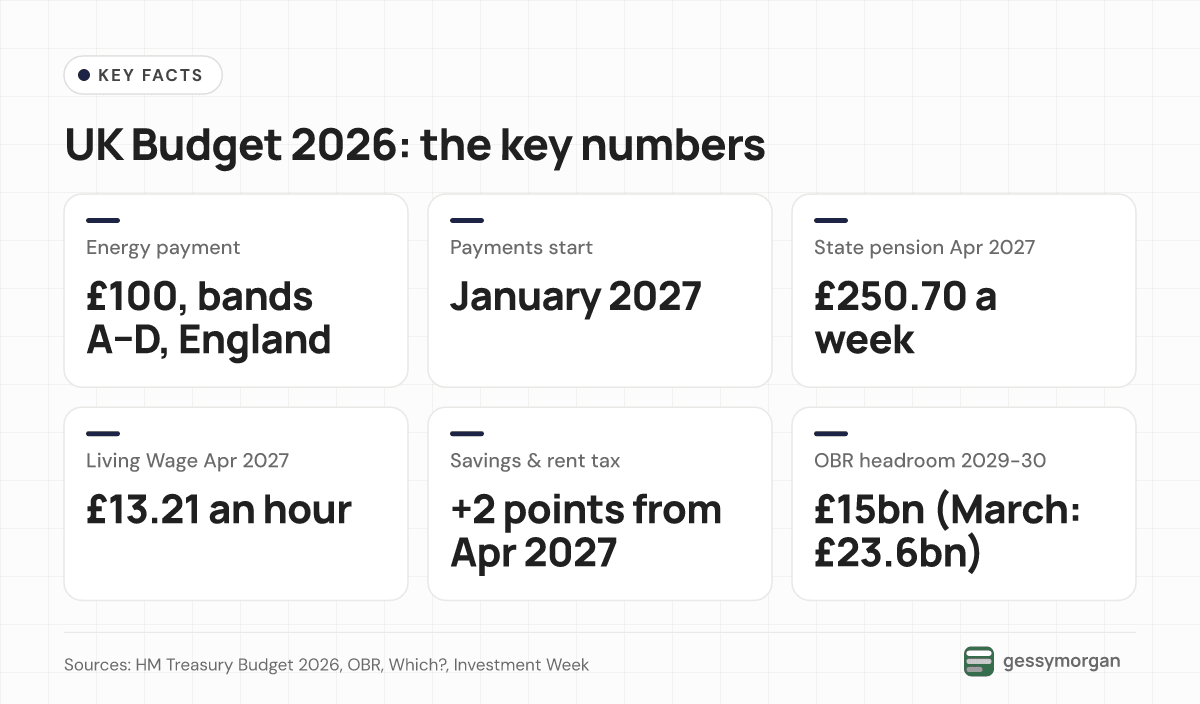
- Healey's October 28 Budget gives £100 towards energy bills to about 20 million homes in council tax bands A to D in England from January 2027, keeps electricity VAT at zero until July and will scrap gas standing charges.
- From April 2027 the state pension rises 3.9% to £250.70 a week, pensioners living on it alone pay no income tax, and the National Living Wage reaches £13.21.
- Tax on savings interest and rental income rises 2 more points from April 2027, HMRC gets bank-deduction powers for small debts from 2029/30, and capital gains tax rates are unchanged.
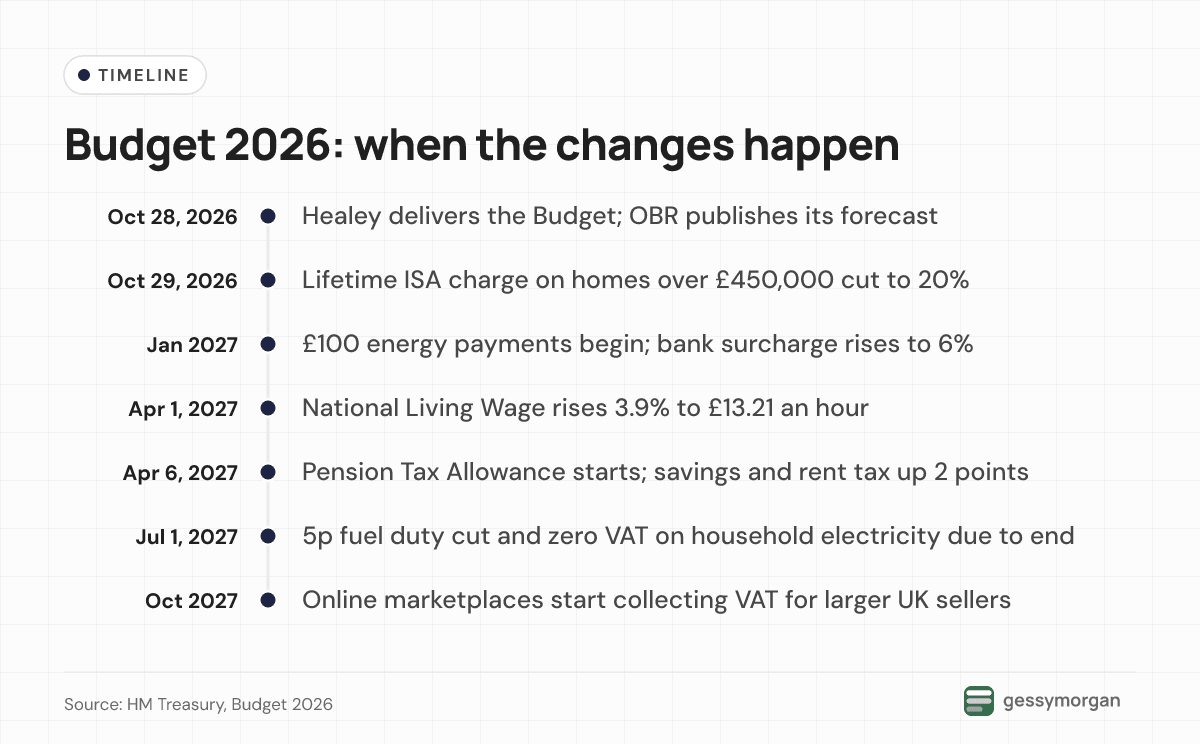
Budget 2026 means a one-off £100 energy payment this winter for about 20 million homes in England, no income tax for pensioners whose only income is the state pension, and higher tax on savings interest and rental income from April 2027. Chancellor John Healey delivered the Autumn Budget on October 28, 2026, and also extended the 5p fuel duty cut and zero VAT on household electricity to July 2027.
This guide explains what the UK Budget 2026 means for you, based on HM Treasury's Budget 2026 document and the Office for Budget Responsibility (OBR) forecast published alongside it. It is accurate as of the morning of October 29, 2026, when the Shadow Chancellor opens the second day of the Commons debate, according to UK Parliament. It is general information only, not financial or tax advice; check GOV.UK and HMRC for your own situation.
Budget 2026: what it means for you at a glance
- Energy bills: £100 for homes in council tax bands A to D in England from January 2027, and zero VAT on electricity until July 1, 2027.
- Pensions: no income tax for those living on the state pension alone.
- Savings and property: higher tax on interest and rental income from April 6, 2027.
- Driving: fuel duty stays at 52.95p a litre until July 1, 2027.
- Unchanged: income tax, National Insurance and VAT rates.
Energy bills: the £100 payment and other help
The biggest new measure is a £2.6bn Household Energy Payment. The Budget document says it will give £100 to up to 20 million households in council tax bands A to D in England from January 2027, delivered by councils through the council tax system. That is about 80% of English homes, whatever your income.
The Budget summary and outlets including LBC say the money will go straight into bank accounts. How it will reach people who do not pay council tax by direct debit has not yet been set out. Scotland, Wales and Northern Ireland get funding and decide on their own help.
The zero VAT rate on household electricity, which started on October 1, now runs until July 1, 2027, which the Treasury says should take about £50 off the April 2027 price cap. Healey also said "Gas standing charges are unfair and outdated, so I am scrapping them", Uswitch reports. The change is due in 2027 or as soon as possible after, in England, Scotland and Wales. The Treasury estimates 60% of households would save about £45 a year, because the fixed charge moves into the price per unit of gas.
Illustration only: Uswitch's own estimate is that a home using 7,000 kWh of gas a year would be about £40 better off, while one using 14,000 kWh could be about £25 worse off.
The widely reported top-up to the Warm Home Discount did not appear, and we found no change to the £150 discount in the Budget documents; see our Warm Home Discount 2026 guide. The Resolution Foundation expects bills to average £2,210 across 2027, up £600 on 2026, and says the new help covers less than a fifth of that rise. It called the support "badly targeted".
Pensions, pay and income tax
The full new state pension will rise 3.9% in April 2027, from £241.30 to £250.70 a week, or £13,036.40 a year, Which? reports from the Budget documents. That takes it above the £12,570 personal allowance for the first time. The Budget's answer is a new Pension Tax Allowance: from April 6, 2027 until April 5, 2030, pensioners whose total income is no more than the new state pension will pay no income tax.
Illustration only: a pensioner whose only income is the full new state pension would have £466.40 above the personal allowance in 2027-28. At the 20% basic rate, that would be about £93 a year in tax without the new allowance; with it, they pay none.
The triple lock continues until April 2029 and will be adjusted from April 2030, the Budget document says. Rathbones notes that the pension tax-free lump sum is unchanged: most people can still take 25%, up to £268,275.
For workers, the National Living Wage rises to £13.21 an hour on April 1, 2027, and the 18 to 20 rate to £11.27. Income tax thresholds stay frozen until April 5, 2031, Rathbones adds.
Savings, ISAs and property income
Healey raised income tax on savings interest and on property income by a further 2 percentage points from April 6, 2027. The 2025 Budget had already set those rates at 22%, 42% and 47% from that date; they will now be 24%, 44% and 49%, Property Reporter notes. The Budget document says 84% of income taxpayers will not be affected.
Illustration only: a basic-rate taxpayer with £1,000 of taxable savings interest, after allowances, would pay £240 at 24% instead of £200 at today's 20%.
The cash ISA limit stays at £20,000, reversing the planned cut to £12,000. From April 2029 a new First Time Buyer ISA replaces the Lifetime ISA for new savers, with up to £4,000 a year, a 25% bonus and homes worth up to £450,000. From October 29, 2026, Lifetime ISA money can go towards homes above £450,000, with the withdrawal charge cut from 25% to 20%.
Fuel, business and other changes
- Fuel duty: stays at 52.95p a litre until July 1, 2027, the RAC reports. The Resolution Foundation says a 7.6p rise is now scheduled for July.
- Banks: the bank surcharge rises from 3% to 6% from January 1, 2027 to March 31, 2028.
- Small businesses: in England, retail, hospitality and leisure properties with a rateable value up to £18,000, up from £12,000, pay no business rates from April 2027. The Treasury says 70,000 more firms benefit.
- Shopping: import tariffs come off more than 100 products, including baked beans, chocolate and gherkins, the Guardian reports.
- Online marketplaces: from October 2027, platforms must collect VAT for UK sellers with more than £90,000 of sales on them.
The rumours: confirmed, changed or not announced
Here is how the reports in our pre-Budget guide turned out.
- HMRC taking tax debts from bank accounts: confirmed, from 2029/30. A new power will let HMRC recover long-standing debts of up to £5,000 for individuals and £10,000 for companies through automated monthly deductions, ICAEW reports. Safeguards include at least 28 days' notice and a "Refund First" approach while objections are reviewed. Reports of a minimum of a few pounds were not confirmed.
- Pensioner tax shield: confirmed. Cut to the tax-free lump sum: not announced.
- Extra £100 on the Warm Home Discount: changed. The £100 goes instead to council tax bands A to D in England.
- Capital gains tax rise: not announced. Rates stay at 18% and 24%. A new Founders' Relief taxes up to £10m of lifetime gains at 10%.
- Bank tax rise, £18,000 rates relief threshold and marketplace VAT: all confirmed.
- Lower mansion tax threshold: not announced. We found no change to the £2m threshold.
- TV licence: not announced. The Budget documents we reviewed contain no change; the fee is £180 under the existing settlement.
For comparison, HMRC's existing Direct Recovery of Debts power applies only to debts over £1,000 and must leave at least £5,000 in your accounts, according to its briefing. About 4.8 million taxpayers owe around £4bn in smaller debts, BDO noted.
What the OBR forecast says
The OBR's Economic and fiscal outlook raises growth this year to 1.2% but expects 1.0% in 2027, then 1.6% in 2028 and 1.8% in 2029, Investment Week reports. Inflation is forecast to peak at 3.8% in early 2027.
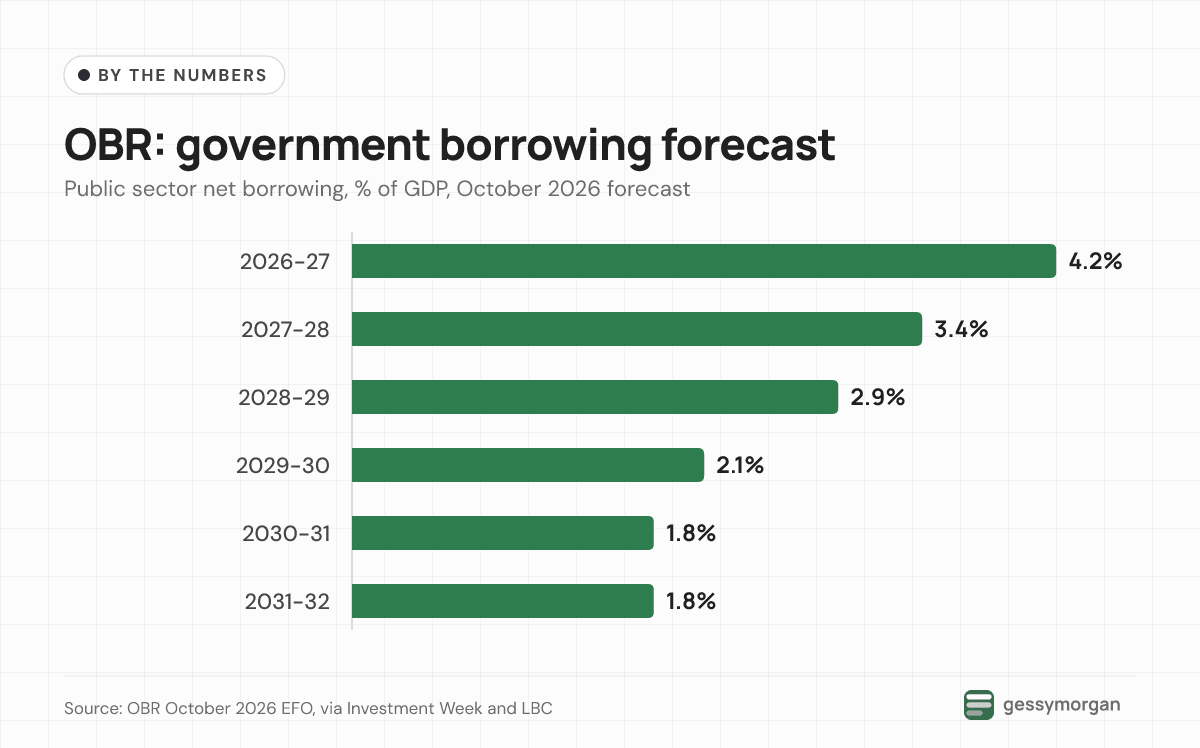
Borrowing is forecast at 4.2% of GDP this year, falling to 2.1% in 2029-30 and 1.8% from 2030-31. Headroom, the margin against the main fiscal rule, is about £15bn in 2029-30, down from £23.6bn in March; the Resolution Foundation puts it at £14.5bn. The OBR said living standards in 2030-31 will be "only around 2% above pre-pandemic levels", the Evening Standard reported.
What each side is saying
Healey said the Budget would help "steer us through the global economic storms today". Prime Minister Andy Burnham said "we don't have huge room for manoeuvre", the Evening Standard reported.
Conservative leader Kemi Badenoch told MPs it "does not come close to meeting the moment", LBC reported. Liberal Democrat leader Ed Davey called for "a real growth plan with Europe at its heart". Green leader Zack Polanski asked: "Was that it?" Reform UK's Treasury spokesman Robert Jenrick called it a "nothing burger".
Analysts were mixed. Institute for Fiscal Studies director Helen Miller said "The plan to reduce borrowing has been pushed back", and the IFS criticised a "raft of fiddly measures". UK Finance said higher bank taxes are not "the best way to deliver growth", and the National Residential Landlords Association said the Budget "made life harder for renters".
Key dates and what to watch
- Today, October 29: day two of the debate and a Resolution Foundation briefing with the OBR.
- Coming weeks: how the £100 payment reaches households that do not pay council tax by direct debit.
- 2027: Ofgem's timetable for removing gas standing charges.
- 2028: planned legislation and detailed safeguards for HMRC's bank deduction power.
For interest rates, see our November rate decision guide.
Our take
Based on the sources above, this was a cautious Budget: temporary help with energy bills, partly funded by a time-limited bank tax, with the bigger tax and spending decisions left for next year.
Details such as how the £100 is paid are still to come, so wait for official GOV.UK guidance before acting.
Frequently asked questions
What does Budget 2026 mean for me?
Most households in England in council tax bands A to D get a £100 energy payment from January 2027, and electricity VAT stays at zero until July 1, 2027. Pensioners whose only income is the state pension will not pay income tax on it, the minimum wage rises 3.9% in April, and tax on savings interest and rental income goes up from April 6, 2027. Income tax, National Insurance and VAT rates are unchanged.
Who gets the £100 Household Energy Payment and when?
The Budget says up to 20 million households in council tax bands A to D in England will get £100 from January 2027, delivered through the council tax system, whatever their income. Details for people who do not pay council tax by direct debit are still to come. Scotland, Wales and Northern Ireland get funding and decide on their own help.
Will pensioners pay income tax on the state pension?
Not if the state pension is your only income. The full new state pension rises to £250.70 a week (£13,036.40 a year) in April 2027, above the £12,570 personal allowance. A new Pension Tax Allowance means pensioners whose total income is no more than the new state pension pay no income tax from April 6, 2027 until April 5, 2030.
Can HMRC take money from my bank account after the Budget?
The Budget confirmed a new power to take long-standing tax debts of up to £5,000 for individuals and £10,000 for companies through automated monthly deductions, starting from 2029/30, with legislation planned for 2028. Safeguards include at least 28 days' notice and refunds while an objection is reviewed. It is aimed at people who can pay but repeatedly ignore HMRC.
What changes for savers and landlords?
From April 6, 2027, income tax on savings interest and property income rises to 24%, 44% and 49%, two points higher than planned. The £20,000 cash ISA limit stays, and a First Time Buyer ISA replaces the Lifetime ISA for new savers from April 2029. Check GOV.UK or a regulated adviser for your own situation.
Sources
- Budget 2026 (HTML), HM Treasury (GOV.UK)
- October 2026 Economic and fiscal outlook, Office for Budget Responsibility (GOV.UK)
- Budget Statement Wednesday 28 October, UK Parliament
- Budget 2026: key points at a glance, The Guardian (via AOL)
- What was in the Budget? What John Healey announced and the UK financial situation, LBC
- Budget 2026 reaction: What have people said in response to John Healey's first speech?, LBC
- Budget balancing act leaves families braced for tough winter and four-year living standards downturn, Resolution Foundation
- Budget 26: OBR cuts fiscal headroom to £15bn by 2029/30 after Middle East shock, Investment Week
- Budget: government confirms measures to tackle tax debt, ICAEW
- State pension set to rise by £488 from April next year, Which?
- Autumn Budget 2026: What was announced and what it means for you, Rathbones
- 'Budget is bold enough' despite limited 'room for manoeuvre', Andy Burnham says, Evening Standard (via AOL)
- Autumn Budget 2026: What it means for motorists, RAC
- Gas standing charge scrapped in budget: will you be better off?, Uswitch
- Budget 2026: landlords dealt property income tax blow as rates to rise an additional 2%, Property Reporter
- Millions of taxpayers face direct deductions from their bank accounts under new HMRC debt plans, BDO
- Issue briefing: Direct recovery of debts, HM Revenue & Customs (GOV.UK)
- Cost of TV licence fee set for 2026/27, Department for Culture, Media and Sport (GOV.UK)
How we wrote this
GessyMorgan explainers are built from public reporting and official sources. This post draws on the 18 sources listed above, each linked where we use it. It was drafted with AI assistance and checked against those sources before publishing. We did not test products, attend events or interview anyone for this article. Facts are current as of October 29, 2026, and we update the post when they change.